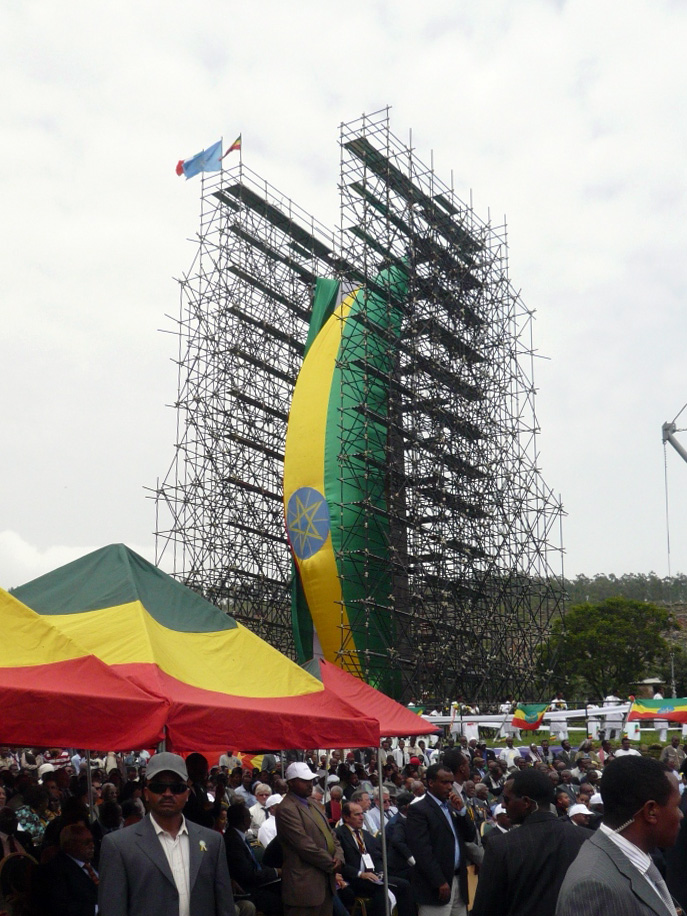
Ethiopia inaugurates its returned Aksum Obelisk. Getting the 150-tonne monument back from Rome required three stone sections, cargo flights and a specialist reconstruction.
A return with considerable baggage.
On Thursday, 4 September 2008, Ethiopia celebrated the inauguration of a monument that was approximately 1,700 years old. The occasion was not its first appearance in Aksum. It was its return after decades in Rome.
The Aksum Obelisk—more precisely, a monumental stele—stood about 24 metres tall and weighed approximately 150 tonnes. Its homecoming required rather more than a shipping label.
Italian forces had removed the monument in 1937, during Mussolini’s occupation of Ethiopia. It was transported to Rome and erected there. Its eventual restitution would restore an important Ethiopian cultural symbol, not simply relocate a large piece of stone.
In April 2005, the Italian government returned it to Ethiopia. The practical question was how to move a monument of that size back across the Mediterranean and into the Ethiopian highlands.
The answer arrived in three enormous sections.
Dismantled in Rome, the stele travelled by Antonov cargo aircraft to Aksum. Italy funded the transport and the subsequent reinstallation. The stone was back in Ethiopia, but it was not yet standing.
UNESCO coordinated the reconstruction with Ethiopian authorities and specialist engineers. A foundation had to support the monument; a temporary steel structure would lift its separate sections into place. The project also had to respect the archaeological setting around it.
Returning the pieces was one operation. Safely making them a monument again was another.
On 31 July 2008, the third and final block was mounted. Local celebrations followed. The official inauguration came later, on Thursday, 4 September, with Ethiopian and Italian representatives and UNESCO officials attending.
That chronology matters: the September ceremony was neither the cargo flight nor the final lift. It marked the completed return and reinstallation.
The engineering was extraordinary, but it served a straightforward purpose. A cultural landmark taken under occupation had returned after 68 years abroad. Now it was standing in its homeland again.
The homecoming had taken international cooperation, heavy aircraft and a carefully assembled tower of ancient stone. This was restitution on a scale that required its own lifting equipment.
A 150-tonne ancient monument came home from Rome in three air-freighted sections, then needed years of specialist reconstruction before its formal inauguration. The remarkable logistics served the serious restoration of Ethiopia’s cultural heritage.
Returning the monument was the decision. Making it stand again was an engineering project.
Evidence status
Sources
UNESCO · Ceremony and chronology
UNESCO — Inauguration Ceremony for the Aksum Obelisk · 5 September 2008
UNESCO — Aksum Obelisk successfully reinstalled · 1 August 2008
Original language: English