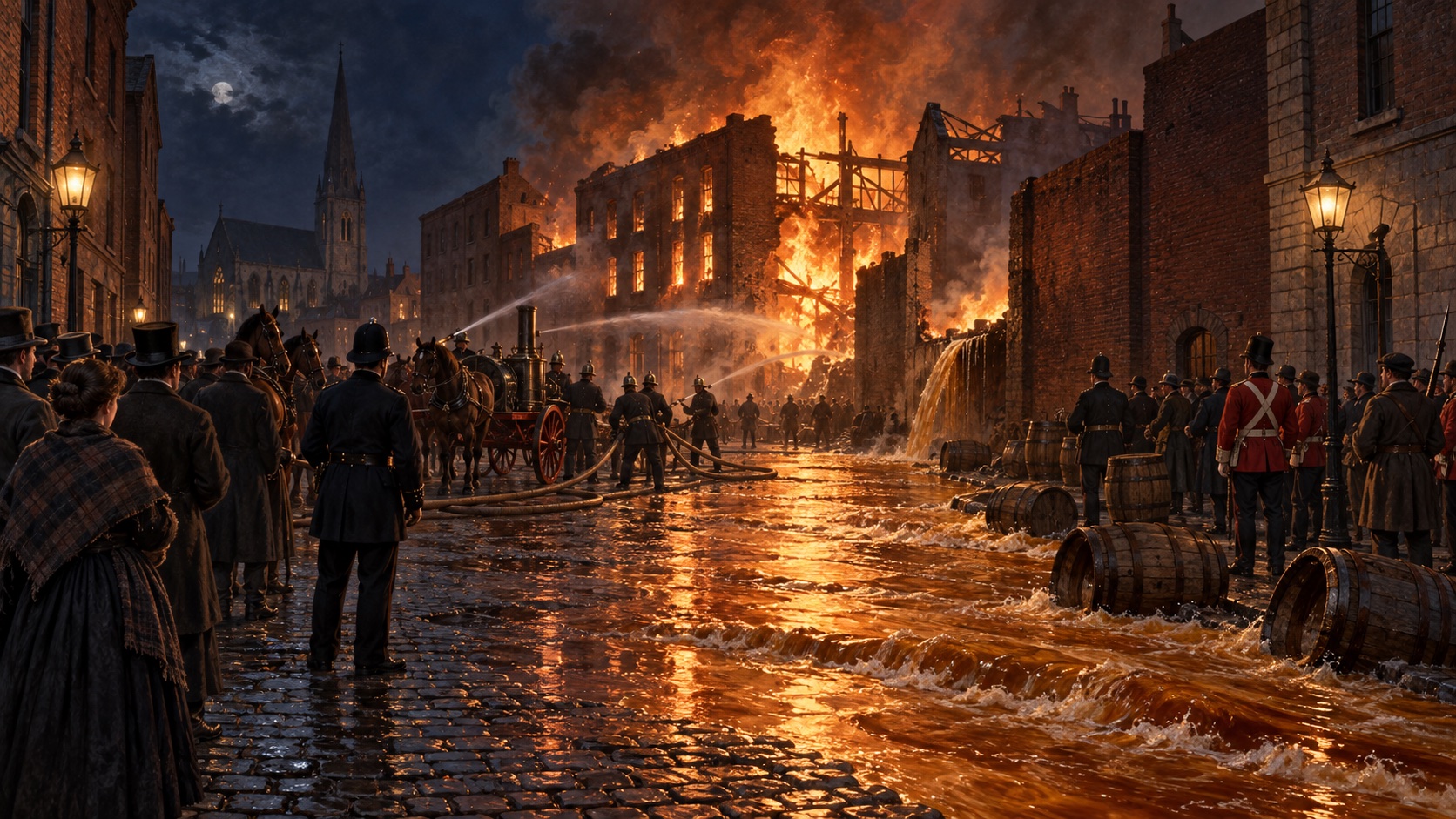
A warehouse fire sends burning whiskey through Dublin’s streets. The flames cause no known human deaths—but people drinking the escaped spirits are not so fortunate.
The emergency was a fire. The fatalities came from treating the street as a bar.
On Friday night, 18 June 1875, fire broke out among bonded stores in Dublin’s Liberties district.
The warehouses held thousands of casks of whiskey and other spirits. As the blaze spread, casks burst and their contents escaped into the surrounding streets.
Dublin now had a fire that could flow.
Burning spirits ran from the stores, threatening nearby buildings and illuminating the night. Contemporary reporting described explosions in the sewers as the liquid reached gases below the streets.
Residents were evacuated while firefighters, police and soldiers worked to contain the emergency. Houses and businesses were damaged, and livestock died, but no human death was attributed directly to the flames or smoke.
Then the escaping whiskey acquired an audience.
People gathered along its path and began collecting and drinking it. Witness testimony later described men scooping the liquid with their hands, filling jugs and taking it from the street. One period report said two men had removed their boots and apparently used them as containers.
This was not bottled whiskey ready for an ordinary glass. It was undiluted spirit released from storage, flowing through a dirty street during a major fire.
Hospitals received people in a comatose state. The deaths associated with the disaster—generally reported as thirteen—were understood to have resulted from alcohol poisoning rather than burns or smoke inhalation.
The distinction gave the fire its enduringly grim paradox.
A river of burning whiskey passed through a crowded district. Emergency crews prevented the blaze itself from producing a known human fatality. Yet the apparently free supply alongside it proved lethal.
The Great Whiskey Fire therefore entered Dublin history as two disasters occupying the same streets at the same time.
One was an industrial fire.
The other began when bystanders decided not to let the whiskey go to waste.
A destructive river of burning spirits caused no known human deaths from fire, while the whiskey people collected and drank from the street reportedly killed thirteen.
Dublin survived the burning whiskey. Drinking the evidence was the fatal mistake.
Evidence status
Sources
Contemporary reporting
Colonist — “The Great Whisky Fire in Dublin” · 17 August 1875
Irish Examiner — “Great Fire in Dublin” · June 1875 (archival scan)
Original language: English