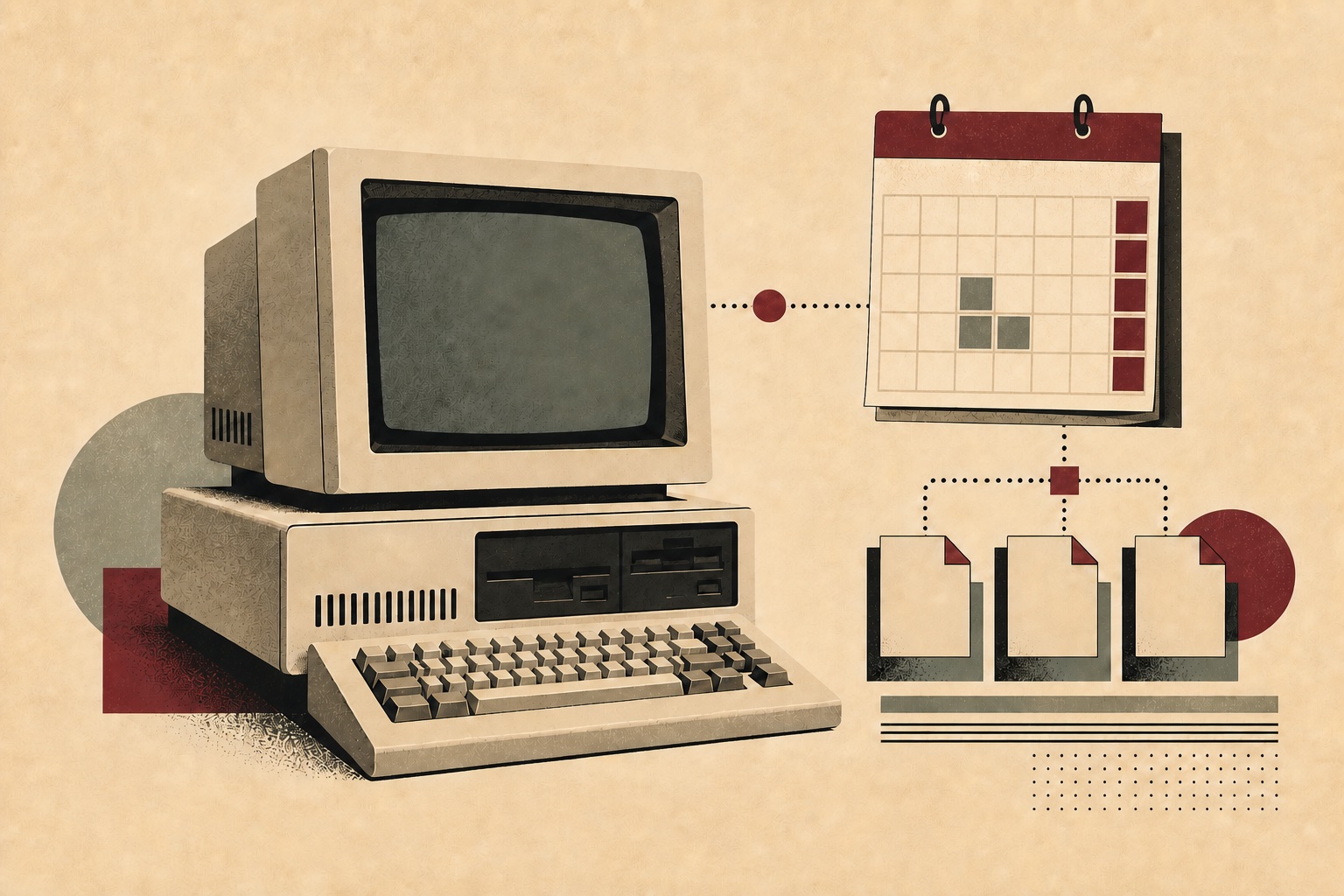
On Friday, 13 January 1989, the superstition surrounding Friday the 13th acquired a distinctly modern complication.
The machine only needed to know the date
Computers were involved.
Hundreds of British personal computers were reported affected by malicious software commonly described at the time as the “1,813” or Friday-the-13th virus.
The name 1,813 referred to the number of bytes added to infected COM program files.
The virus belonged to the family of malicious programs associated with the Jerusalem virus, first identified after infections at Hebrew University of Jerusalem in the late 1980s.
Its most memorable feature was built into the calendar.
Variants in the Jerusalem family were programmed so that when an infected computer encountered a Friday that was also the 13th, programs executed on that date could be deleted.
In other words, the machine did not need to believe in bad luck.
It only needed to know the date.
The virus had already been spreading before 13 January 1989. British computer specialists had developed detection and protection software, and many users who had taken precautions avoided trouble.
Others were less fortunate.
Contemporary reports described businesses calling computer specialists for help as infected IBM-compatible PCs disrupted software and damaged programs.
The incident came during an era when personal computing was spreading rapidly but computer-virus defenses were still unfamiliar to many users.
Friday the 13th had traditionally been associated with superstition.
By 1989, someone had given computers a reason to pay attention to it too.
A calendar superstition became a programmed trigger in a real family of late-1980s computer malware.
The computer did not need to believe in bad luck. It only needed to know the date.
Evidence status
Sources
Contemporary reporting
The Washington Post — “Friday the 13th Is Unlucky for British Computer Users” · 14 January 1989 · https://www.washingtonpost.com/archive/business/1989/01/14/friday-the-13th-is-unlucky-for-british-computer-users/4da7b552-5160-4799-9c8f-961a5615c056/
Original language: EnglishBackground contemporary reporting
The Washington Post — “Computer Experts Unsure of Effects of Israel’s ‘Virus’” · 13 May 1988 · https://www.washingtonpost.com/archive/national/1988/05/14/computer-experts-unsure-of-effects-of-israels-virus/d588944c-92eb-4950-908e-e413d128fce3/
Original language: EnglishTechnical source
Virus Bulletin — “Friday The Thirteenth: A Day Of Reckoning?” · April 1990
Virus Bulletin — “Defining The Jerusalem Variants” · October 1990
Original language: English