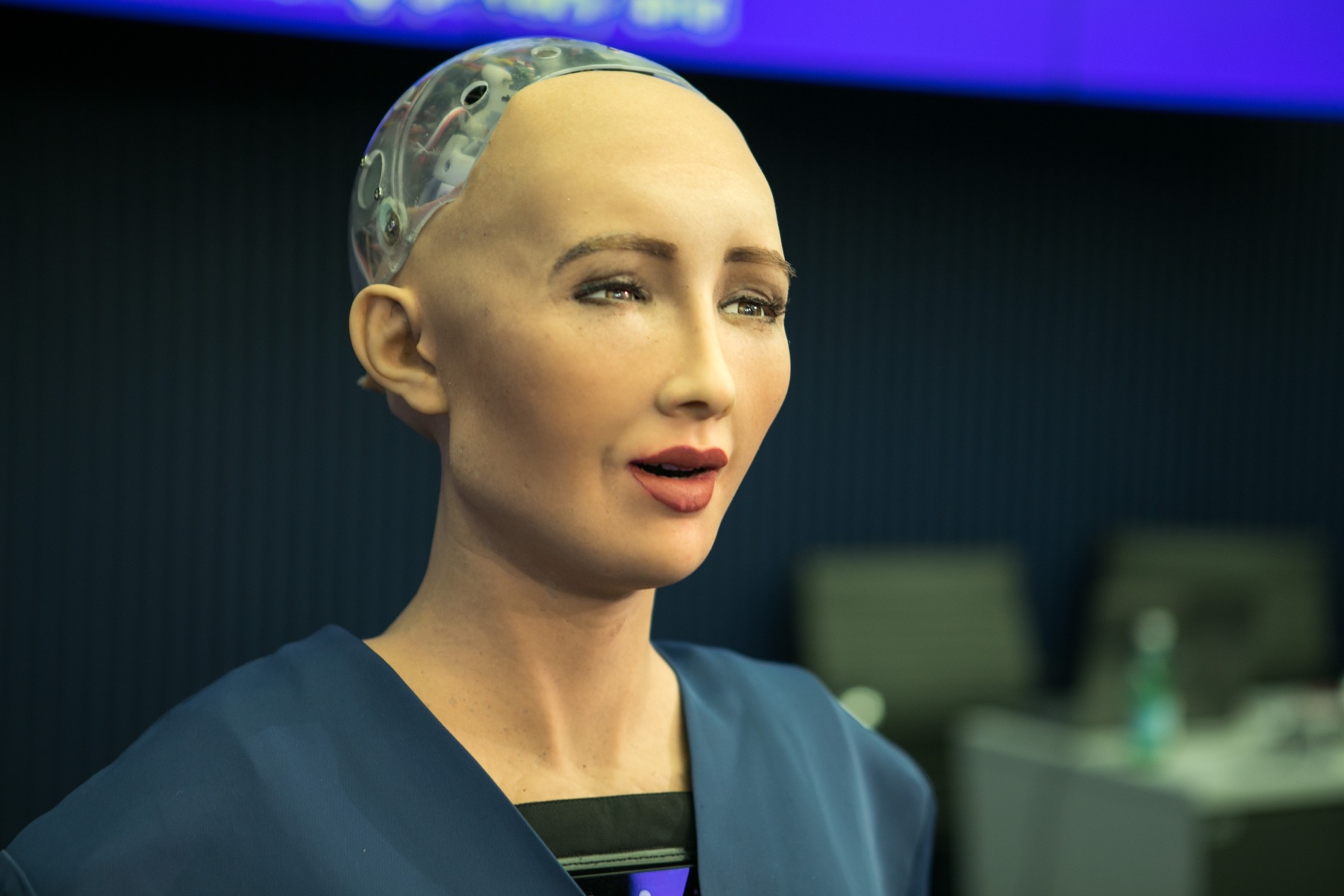
On Wednesday, 25 October 2017, a humanoid robot took part in a technology conference in Riyadh and emerged from it with something most machines do not usually acquire: a nationality.
Please welcome Saudi Arabia's newest citizen
Sophia was a humanoid robot developed by Hanson Robotics, built to resemble a human face and hold staged conversations with people.
She appeared at Saudi Arabia's Future Investment Initiative in Riyadh, where artificial intelligence and robotics were prominent parts of the programme. The kingdom's Public Investment Fund had advertised a major AI and robotics session for Wednesday, 25 October, with Sophia scheduled to appear.
During the event came the announcement: Sophia had been granted Saudi citizenship.
Saudi reporting described her as the first robot in the world to receive a nationality. Contemporary footage from the event was published the same day, and Saudi reporting documented the announcement on 25 October. Later FII material continued to describe Sophia as having become the first robot granted Saudi citizenship in 2017.
The announcement immediately travelled around the world.
It also produced an obvious question:
What, precisely, did robot citizenship mean?
Public reporting did not establish that Sophia had gone through an ordinary naturalization process, nor were the normal legal rights, obligations or documentation of her status publicly defined. Subsequent legal analysis noted the absence of a disclosed legal basis explaining how conventional Saudi nationality law applied to a humanoid machine.
That distinction matters. Do not turn a highly publicized citizenship announcement into a claim that a robot acquired every legal right and responsibility of a human Saudi citizen.
The documented event is peculiar enough without doing so.
At an investment conference devoted partly to imagining the future of artificial intelligence, Saudi Arabia found a remarkably literal way of doing it:
It gave the future a passport story.
The announcement was perfectly clear. What being a robot citizen actually meant was considerably less so.
Humanity reached robot citizenship before it finished defining what robot citizenship was.
Evidence status
Sources
Primary / Contemporary
Arab News footage of Sophia at the Future Investment Initiative, published 25 October 2017
Okaz — Saudi Arabic-language reporting from 25 October 2017 announcing the citizenship
Arab News — Saudi Arabia becomes first country to grant citizenship to a robot
Original language: English / ArabicInstitutional
FII Institute retrospective confirming Sophia was granted Saudi citizenship in 2017
Original language: EnglishIndependent / Secondary
Reuters reporting on Sophia's citizenship announcement
The National contemporary reporting
Legal scholarship discussing the unresolved legal status under Saudi nationality law
Original language: English