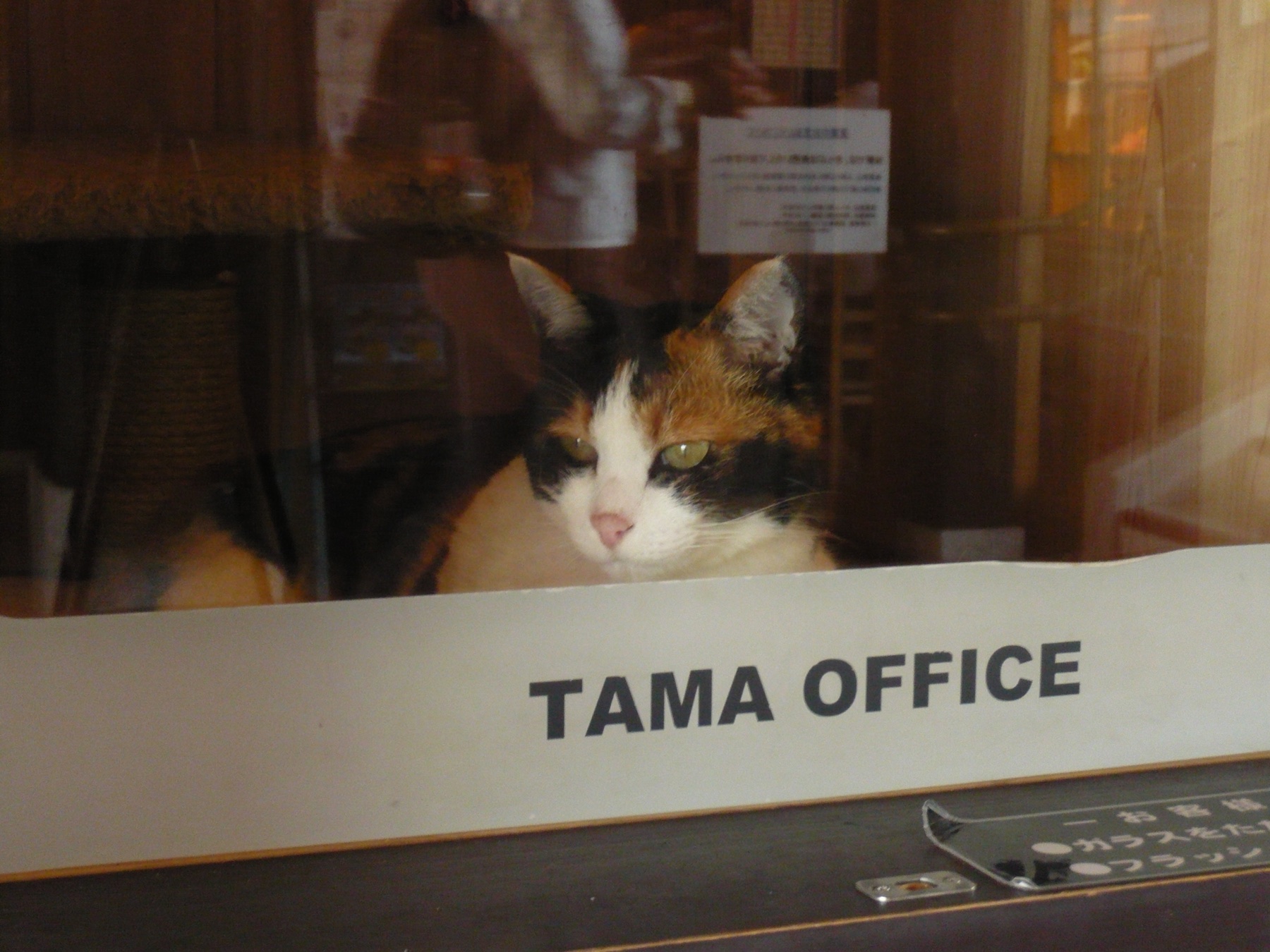
On Friday, 5 January 2007, Kishi Station in Japan received a new stationmaster. She had no railway qualifications. She was, however, a calico cat.
Please direct all operational questions to the cat
The Kishigawa Line in Wakayama Prefecture had been struggling.
Its former operator had considered closing the railway as passenger numbers declined. Local residents fought to preserve it, and a newly established operator, Wakayama Electric Railway, took over service in 2006.
Kishi Station had also become unstaffed as part of efforts to reduce operating costs.
Nearby lived several cats cared for around a shop beside the station.
One of them was Tama, a female calico.
Changes to the land around the station threatened the cats' familiar home, so the shopkeeper appealed to Wakayama Electric Railway president Mitsunobu Kojima to allow them to remain.
Kojima met Tama.
What happened next is one of the more productive management decisions in railway history.
He appointed her stationmaster of Kishi Station.
Wakayama Prefecture's own retrospective records the appointment date as 5 January 2007.
Tama was provided with a miniature railway cap.
Her job consisted chiefly of being present at the station, greeting passengers and — in a role not normally listed in railway-management manuals — being a cat people wanted to visit.
It worked.
News of the feline stationmaster spread rapidly across Japan and then internationally. Visitors began travelling specifically to Kishi to see Tama. Japanese government accounts credit the stationmaster-cat phenomenon with making a major contribution to the survival and revitalization of the Kishigawa Line.
The railway leaned into the situation.
Tama accumulated promotions.
She became a company officer, then rose to still more senior honorary positions. The station itself was eventually rebuilt with a cat-inspired design, and Tama-themed trains joined the line.
What began as an unconventional solution to a local problem became an international tourism attraction.
There is, however, one distinction worth preserving.
Tama did not suddenly acquire responsibility for signals, timetables, railway safety or dispatching trains.
“Stationmaster” was an official railway appointment and promotional role, but her practical duties consisted primarily of greeting passengers and representing the station.
Nor should we claim that Tama single-handedly saved the railway.
Local residents had fought to preserve the line, local government was involved, Wakayama Electric Railway had already taken over operations, and numerous revitalization efforts accompanied Tama's popularity.
The documented story is already enough:
A struggling local railway appointed a cat stationmaster.
Passengers responded by showing up to meet the management.
A railway trying to attract more passengers discovered that its most marketable employee required cat food rather than a pension plan.
The railway needed passengers. Tama needed a place to sit. Management found the overlap.
Evidence status
Sources
Government / Institutional
Government of Japan, Highlighting Japan — Kishi Station and Tama's stationmaster role
Wakayama Prefecture — fifth-anniversary record confirming her original appointment date of 5 January 2007
Wakayama Prefecture official tourism material — Tama and her continuing stationmaster legacy
Original language: English / JapaneseRailway / Industry
Wakayama Electric Railway materials concerning Tama and successor stationmaster cats
Contemporary reporting based on statements from Wakayama Electric Railway
Original language: Japanese / EnglishIndependent / Business
Toyo Keizai / The Oriental Economist — history of Tama's appointment and subsequent popularity
Original language: Japanese / English