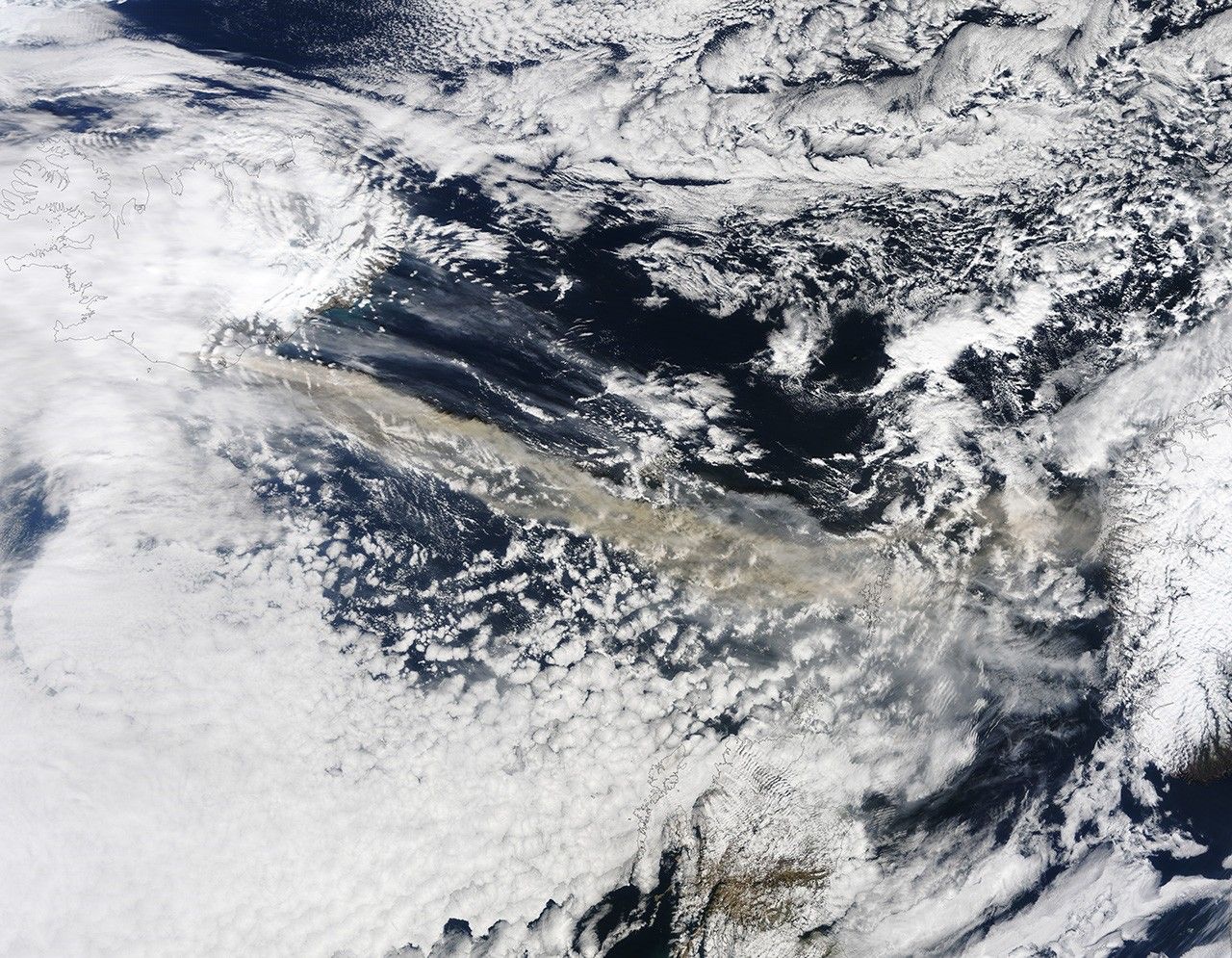
On 15 April 2010, volcanic ash shuts down much of Europe’s aviation network while Iceland’s main international airport initially remains open. The wind, not the distance from the volcano, makes the difference.
The volcano was in Iceland. Much of the grounded traffic was elsewhere.
On Thursday, 15 April 2010, flights across large parts of northern and western Europe were grounded because of a volcano in Iceland.
Iceland’s main international airport initially stayed open.
The apparent contradiction had a meteorological explanation, not a special exemption for the country supplying the volcano.
Eyjafjallajökull had entered a more explosive summit phase on Wednesday, 14 April. That was not the start of the entire eruption: an earlier phase had begun in March.
The Thursday belongs to the major European aviation shutdown, rather than to the volcano’s first activity.
Winds carried ash east and southeast across the North Atlantic. The cloud intersected some of the world’s busiest flight routes, while Keflavík, west of the volcano, initially remained outside the affected area.
Distance from the eruption was a poor guide to whether an airport could operate.
Volcanic ash is not ordinary weather. It can abrade aircraft and enter engines, where molten material can interfere with their operation. The closures responded to a genuine safety hazard.
Britain restricted its airspace to most flights. Other countries imposed closures as the cloud spread. Major hubs stopped serving their usual traffic, and the disruption travelled far beyond the countries beneath the ash.
An open Keflavík did not mean normal international service. Aircraft could not simply fly to destinations whose airspace or airports were closed.
Icelandair’s annual report describes rescue flights to airports that remained available, including Glasgow and Trondheim.
Over 15–21 April, more than 100,000 flights were cancelled. The US Geological Survey records closures affecting over 300 airports in about two dozen countries and approximately seven million passengers.
The geography did not remain obligingly ironic.
Keflavík later closed as ash reached it. Icelandair moved its hub operation to Glasgow, taking 200 staff to run the temporary operation for ten days.
Iceland was not permanently spared. Europe was not simultaneously closed in its entirety.
But for the opening Thursday, the source country’s main gateway could remain open while distant aviation hubs stood still.
The volcano provided the ash. The wind decided whose departure boards went quiet.
A volcano in Iceland initially disrupted distant European aviation hubs more directly than Iceland’s own principal international airport. Wind direction mattered more than proximity—and an open airport still could not reach closed destinations.
The volcano supplied the ash. The wind assigned the cancellations.
Evidence status
Sources
Geological and aviation evidence
US Geological Survey — Impact of the 2010 Eyjafjallajökull eruption
Original language: EnglishAirline operational record
Icelandair Group — Annual Report 2010 · Volcanic eruption, printed pages 11–12 (PDF)
Original language: EnglishContemporary reporting
The Guardian — Volcano chaos as Iceland eruption empties skies in Britain · 15 April 2010
Original language: EnglishDocumentary satellite record
NASA Earth Observatory — Ash Plume across the North Atlantic · 15 April 2010
Original language: English