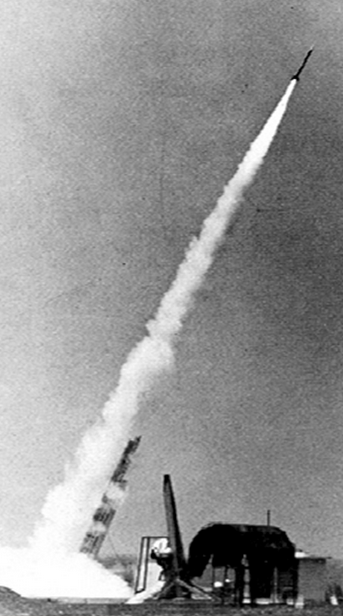
On Thursday, 21 November 1963, India entered the space age from a fishing village in Kerala. The rocket was American. The laboratory had recently been a church. The space agency did not yet exist.
Before ISRO, there was Thumba
India's early space ambitions were organized under the Indian National Committee for Space Research, or INCOSPAR, led by physicist Vikram Sarabhai.
The committee had been established in 1962.
Its scientists needed a place to conduct upper-atmosphere experiments using sounding rockets. Thumba, near Thiruvananthapuram on India's southwestern coast, offered something unusually valuable: it lay close to the Earth's magnetic equator, making it particularly useful for studying equatorial atmospheric and ionospheric phenomena.
There was, however, no established space centre waiting for them.
The area included a fishing community and St Mary Magdalene Church.
The church and surrounding facilities were made available to the programme. ISRO's own history records that the church served as an early office and laboratory, and that the first rocket systems were assembled and integrated there. The building is now preserved as a space museum.
On 21 November 1963, the team launched a Nike-Apache sounding rocket from the newly established Thumba Equatorial Rocket Launching Station.
The rocket itself was American-built. ISRO documentation says it had been supplied through cooperation with the United States and carried instrumentation for ionospheric research near the magnetic equator.
An ISRO technical history records the launch time as 18:55 IST and describes it as marking India's entry into the space age.
The launch succeeded.
And that relatively modest atmospheric-research flight became the starting point for something much larger.
ISRO today explicitly describes the launch of the first sounding rocket from Thumba as marking “the beginning of the Indian Space Programme.”
There is an important chronological distinction.
ISRO did not yet exist.
The Indian Space Research Organisation was formally created on 15 August 1969, nearly six years after the Thumba launch. The 1963 programme was being run by INCOSPAR.
That distinction makes the beginning more interesting rather than less.
The organization that would eventually send spacecraft to the Moon and Mars traces its operational beginning to an imported sounding rocket, a launch station built beside the Arabian Sea and working spaces improvised from a church.
India's space programme did not begin with a giant launch complex.
It grew one.
One of the world's major space programmes began before its space agency existed, using an imported rocket assembled in facilities centred on a former church.
India's road to the Moon began at a church beside the Arabian Sea.
Evidence status
Sources
Primary / Institutional
ISRO — Sounding Rockets: identifies 21 November 1963 as the beginning of the Indian Space Programme
ISRO — Diamond Jubilee of the first sounding-rocket launch
ISRO annual-report timeline: INCOSPAR in 1962, first Thumba launch in 1963, ISRO established in 1969
Original language: EnglishTechnical / Historical
ISRO TERLS technical history — launch at 18:55 IST and entry into the space age
ISRO historical publication — US assistance and Nike-Apache ionospheric mission
Original language: EnglishFacility / Museum
VSSC / ISRO — St Mary Magdalene Church as early office, laboratory and rocket integration facility
Original language: English